


Page 146 - Social Enterprise A New Business Paradigm for Thailand
P. 146
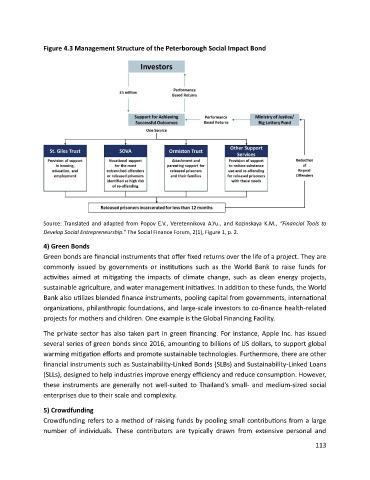
Figure 4.3 Management Structure of the Peterborough Social Impact Bond


               Source:  Translated  and  adapted  from  Popov  E.V.,  Veretennikova  A.Yu.,  and  Kozinskaya  K.M.,  “Financial  Tools  to
               Develop Social Entrepreneurship.” The Social Finance Forum, 2(1), Figure 1, p. 2.

               4) Green Bonds
               Green bonds are financial instruments that offer fixed returns over the life of a project. They are
               commonly  issued  by  governments  or  institutions  such  as  the  World  Bank  to  raise  funds  for
               activities  aimed  at  mitigating  the  impacts  of  climate  change,  such  as  clean  energy  projects,

               sustainable agriculture, and water management initiatives. In addition to these funds, the World
               Bank also utilizes blended finance instruments, pooling capital from governments, international
               organizations, philanthropic foundations, and large-scale investors to co-finance health-related
               projects for mothers and children. One example is the Global Financing Facility.

               The private sector has also taken part in green financing. For instance, Apple Inc. has issued
               several series of green bonds since 2016, amounting to billions of US dollars, to support global
               warming mitigation efforts and promote sustainable technologies. Furthermore, there are other
               financial instruments such as Sustainability-Linked Bonds (SLBs) and Sustainability-Linked Loans

               (SLLs), designed to help industries improve energy efficiency and reduce consumption. However,
               these  instruments  are  generally  not  well-suited  to  Thailand’s  small-  and  medium-sized  social
               enterprises due to their scale and complexity.

               5) Crowdfunding
               Crowdfunding refers to a method of raising funds by pooling small contributions from a large
               number  of  individuals.  These  contributors  are  typically  drawn  from  extensive  personal  and

                                                                                                         113

